TL;DR
- Tooth decay is widespread across all age groups, making preventive care, such as fluoride treatment, essential for long-term oral health.
- Fluoride treatment strengthens tooth enamel, slows the growth of harmful bacteria, and can reverse the early stages of decay before cavities form.
- Dentists recommend fluoride treatment based on age, cavity risk, dental history, and conditions such as dry mouth or gum recession.
- Professional fluoride treatments include varnish, gel, foam, and prescription-strength products, chosen according to individual dental needs.
- An in-office fluoride treatment is quick, painless, and involves applying fluoride to clean or dried teeth, followed by brief post-treatment instructions.
- Fluoride is safe when used within recommended daily limits. Careful supervision is advised for young children to prevent excess intake.
Why Fluoride Treatment Matters in Preventing Tooth Decay?
Tooth decay is one of the most common health problems in the United States, affecting people of all ages. About half of children aged 6 to 9 have had a cavity in their baby or permanent teeth, and around 21% of adults aged 20 to 64 have at least one untreated cavity. These numbers highlight how widespread tooth decay is and why preventative care is so important.
Fortunately, fluoride treatment for tooth decay is a proven way to protect teeth. This naturally occurring mineral not only strengthens enamel but can also help reverse early decay before it develops into a full cavity. In this blog, we’ll explore how fluoride treatment works, the benefits it offers, its safety, and what you can expect during a visit to your dentist.
What is Fluoride Treatment, and How Does It Work?
Fluoride treatment is a dental procedure where a concentrated form of fluoride is applied to the teeth to help prevent and treat tooth decay. This treatment can come in the form of a gel, foam, or varnish and is usually done during a routine dental visit.
Here is how fluoride treatments work to keep teeth healthy:
- Remineralizes the enamel: Fluoride helps rebuild weakened enamel by replacing lost minerals, making the tooth surface stronger.
- Makes enamel more resistant: It forms a stronger, acid-resistant layer on teeth, which protects against cavities caused by acids from food and bacteria.
- Slows bacterial activity: Fluoride teeth treatment reduces acid production from plaque bacteria, helping prevent further decay.
- Reverses early decay: Fluoride can repair tiny early spots of decay before a cavity fully forms.
- Reduces cavity risk: Fluoride strengthens teeth and reduces the risk of cavities by approximately 25%.
- Protects exposed roots: For people with gum recession, fluoride strengthens the vulnerable root surface and reduces sensitivity.
When is Fluoride Treatment Recommended?
Our dentists at Norwood Dental usually recommend fluoride treatment for tooth decay based on age, dental health, and risk factors for cavities. It is often suggested:
- For children: Since kids’ teeth are still developing, regular fluoride treatments help strengthen enamel and prevent cavities from forming early.
- For adults with high cavity risk: Adults who frequently get cavities, have weakened enamel, or have fillings may benefit from fluoride treatments for teeth.
- For people with gum recession or exposed roots: Fluoride protects sensitive areas that are more prone to decay.
- For individuals with dry mouth or certain medical conditions: Reduced saliva can increase the risk of tooth decay, making fluoride an important preventive measure.
- After dental procedures: Dentists may apply fluoride after treatments like cleanings, fillings, or teeth whitening to help protect enamel and support healing.
Dentists may recommend fluoride treatments every 3, 6, or 12 months, depending on a patient’s risk of cavities.
Types of Professional Fluoride Treatments Dentists Use
Dentists use different forms of fluoride teeth treatments depending on a patient’s age, risk of tooth decay, and specific dental needs. The main types include:
- Fluoride varnish: This is the most commonly used professional treatment. The dentist paints a thin layer of fluoride onto the teeth, which quickly hardens and provides long-lasting protection. It is generally safe for both children and adults.
- Fluoride gel or foam: These treatments are usually applied using a tray that fits over the teeth. The gel or foam stays in contact with the teeth for a few minutes, allowing fluoride to strengthen enamel and reduce the risk of cavities.
- Prescription-strength fluoride toothpaste or rinse: For patients at higher risk of tooth decay, dentists may recommend special fluoride toothpaste or mouth rinses that contain higher concentrations of fluoride than standard products. These help provide extra protection between dental visits.
What Happens During an In-Office Fluoride Treatment?
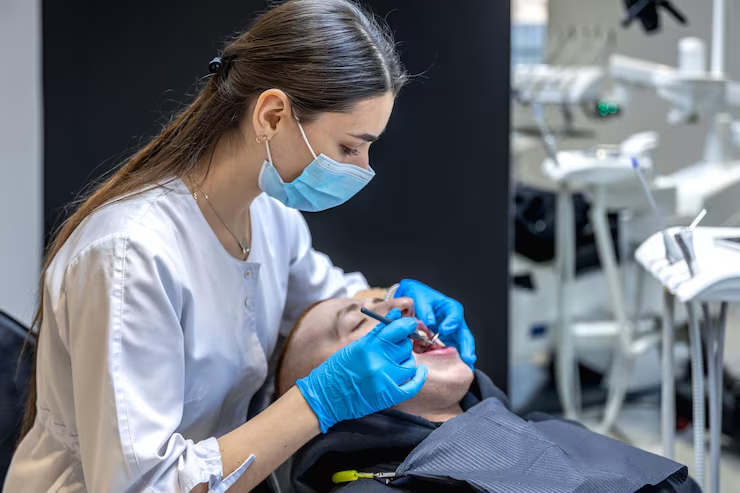
An in-office fluoride treatment is a simple and comfortable procedure that usually takes only a few minutes. Here’s what you can expect during your dental visit:
- Teeth cleaning or drying: The dentist or dental hygienist may begin by cleaning your teeth or gently drying them. This helps the fluoride stick better to the tooth surface and work more effectively.
- Application of fluoride: The fluoride is then applied to your teeth in the form of a varnish, gel, or foam. Varnish is painted directly onto the teeth, while gels or foams are often placed using a tray that fits over your teeth.
- Quick setting time: The fluoride sets quickly and does not cause pain or discomfort. Most patients do not feel anything beyond a mild taste or texture.
- Post-treatment instructions: After the treatment, your dentist will give you simple instructions to follow. Depending on the type of fluoride used, you may be asked to avoid eating or drinking for a short period to allow the fluoride to fully absorb.
Is Fluoride Safe?
Yes, fluoride is safe when used at recommended levels. Dental products and public water supplies are strictly regulated to ensure fluoride stays within safe limits.
Daily fluoride intake from all sources, such as food, water, and supplements, should stay within the following ranges:
- Birth to 3 years: 0.1 to 1.5 mg per day
- 4 to 6 years: 1 to 2.5 mg per day
- 7 to 10 years: 1.5 to 2.5 mg per day
- Adolescents and adults: 1.5 to 4 mg per day
Because young children are more sensitive to excess fluoride, proper toothpaste use is especially important. Children under 3 years should brush only under adult supervision using a very thin smear of fluoride toothpaste, about the size of a grain of rice. For children aged 3 to 6 years, a pea-sized amount is sufficient. Parents should supervise brushing and ensure the child spits out the toothpaste rather than swallowing it.

Conclusion
Fluoride treatment plays an important role in protecting teeth from decay at every stage of life. By strengthening enamel, slowing bacterial activity, and repairing early signs of damage, it helps prevent cavities before they become serious dental problems. When used according to professional guidelines, fluoride treatment for tooth decay is both safe and highly effective for children and adults.
If you are unsure whether fluoride treatment is right for you or your child, a personalized dental assessment can help. Our team at Norwood Dental can evaluate your oral health needs and recommend the most suitable preventive care.
To learn more or schedule a consultation, contact the Norwood Dental clinic at (952) 467-3518 or email us at appointments@norwood-dental.com.
You can also visit us at 222 E Wilson St, Norwood Young America, MN 55368.
FAQs
The protective effects of professional fluoride treatment can last for 3 to 6 months.
Small amounts swallowed during brushing or treatment are generally harmless. However, repeated or large amounts could be a cause for concern. Using fluoride products as directed keeps the risk very low.
This depends on the type of fluoride used. With fluoride varnish, you may be asked to wait a short time before eating or drinking. Your dentist will provide specific instructions after the treatment.
Yes, fluoride can help reduce tooth sensitivity. It strengthens enamel and protects exposed areas of the tooth, which can lessen discomfort caused by hot, cold, or sweet foods.
Fluoride does not whiten teeth. Its main role is to strengthen enamel and prevent decay. However, healthier enamel can make teeth look cleaner and more even in appearance.