Key Takeaways
- The full process runs from consultation and 3D imaging, through extraction and bone grafting if needed, to implant placement and healing.
- It typically takes three to eight months from start to finish.
- Mild swelling, bruising and tenderness are normal for the first few days and improve quickly with basic aftercare.
- Ongoing risks like infection, implant failure or peri-implantitis are low but real, and rise with smoking or unmanaged health conditions.
- Long-term success depends on daily brushing, flossing and regular dental checkups, since implants can fail later without upkeep.
How Dental Implant Treatment Works
A missing tooth rarely stays a simple gap. The jawbone underneath starts to lose density without a root there to keep it active, and the teeth on either side slowly drift toward the open space. A dental implant is the one replacement built to address both, not just cover up what’s missing.
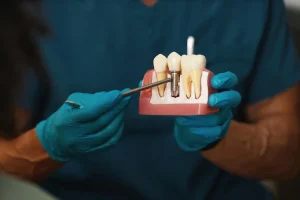
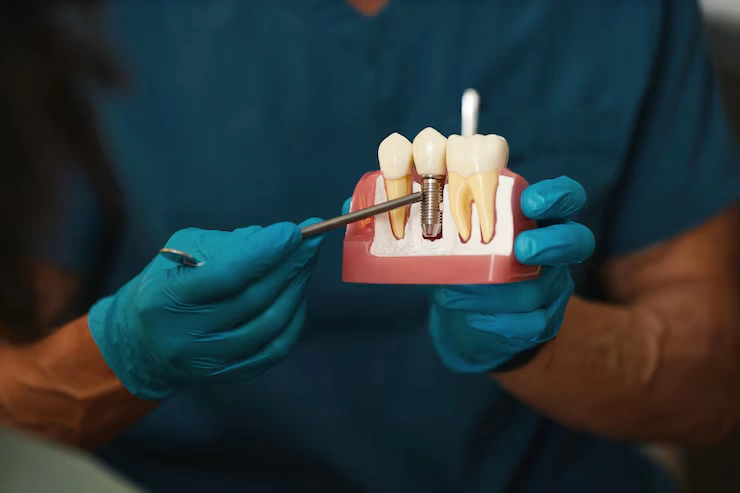
A dental implant procedure replaces a missing tooth from the root up. A titanium post goes into the jawbone to act as the new root, and once it heals in place, a crown is attached on top to complete the tooth. That’s the short version. In practice, it happens in stages, each one given time to heal before the next begins.
At Norwood Dental, we walk patients through each stage before treatment starts, so nothing on visit day comes as a surprise. Here’s what that actually looks like, step-by-step.
What Is the Procedure for Dental Implants?
The dental implant process can take three to eight months depending on whether extractions or bone grafting are needed. Here is what the dental implant procedure step-by-step looks like:
1. Consultation and 3D Imaging
Your dentist reviews your dental and medical history, takes X-rays and typically performs 3D Cone Beam CT imaging to map your jawbone in three dimensions. At Norwood Dental, Dr. Brandon Bussler uses this technology to assess bone depth, identify the exact position of nerves and sinuses, and plan the precise angle of implant placement. This imaging session produces your full treatment plan, including whether extraction or grafting is needed first.
2. Tooth Extraction, If Needed
If a damaged or decayed tooth is still in place, it has to come out first. In some cases, the implant can go in the same day as the extraction. In others, the jaw needs several weeks to heal before it is ready for a new post.
3. Bone Grafting, If Needed
Not every jawbone has enough density to support an implant right away, especially if a tooth has been missing for a while. When that happens, a bone graft rebuilds the area first. This step alone can take three to six months to fully integrate before the next stage can begin.
4. Implant Placement
This stage of the tooth implant procedure is where the titanium post goes into the jawbone under local anesthesia. Norwood Dental uses The Wand, a computer-controlled anesthetic delivery system, during this step, which helps keep the experience calm rather than clinical since patients do not feel the pinch of a traditional needle.
5. Osseointegration and Healing
Once the post is placed, the jawbone needs time to fuse around it. This healing process, called osseointegration, is what gives an implant its strength. Healing time varies from patient to patient, but it can take up to six months for the site to be considered fully healed.
6. Abutment Placement
After osseointegration, a small connector piece called an abutment is attached to the top of the implant post. Sometimes this is done at the same time as the initial placement; other times it is a brief, separate visit.
7. Dental Crown Placement
Finally, a custom crown, shaped and shaded to match the surrounding teeth, is attached to the abutment. Because Norwood Dental has CEREC same-day crown technology in-house, some patients can walk out with a permanent crown in a single visit rather than waiting weeks for a lab-made one to come back.
What Can You Expect After Dental Implant Surgery?
Some swelling, tingling and facial bruising in the first few days is normal and expected. It is not a sign that anything went wrong. The dentist may prescribe medication to manage discomfort and recommend cold compresses to help bring swelling down faster.
A few things that generally help recovery go smoothly:
- Sticking to soft foods for the first several days
- Avoiding straws, since the suction can disturb healing tissue
- Skipping smoking, which slows healing and raises implant failure risk
- Keeping the surgical site clean without brushing directly over it right away
Most patients are back to normal daily activity within a few days, even though full bone healing takes months behind the scenes.
What Are the Risks and Complications of Dental Implants?
Every surgical procedure carries some risk, and dental implants are no exception, even with success rates as high as they are. Being upfront about this is part of good care. Possible complications include:
- Infection at the implant site
- Implant failure, which studies place at roughly 2% to 5% of cases depending on the patient and site
- Nerve or sinus injury, which is uncommon when imaging like Cone Beam CT is used beforehand
- Peri-implantitis, a gum infection around the implant that develops later if hygiene slips
Factors like smoking, uncontrolled diabetes and low bone density raise these risks, which is exactly why the pre-procedure evaluation matters so much. It gives the dentist a chance to flag concerns and adjust the plan before surgery rather than after.
How Do You Care for Dental Implants After the Procedure?
An implant is not a natural tooth, but it still needs consistent care to last. Even though it cannot get a cavity, poor hygiene can still affect the gum and bone around it. Here’s what we recommend:
- Brush twice daily with a soft-bristled, non-abrasive toothbrush
- Floss daily with unwaxed floss, which glides more gently around the implant
- Ask about a special oral irrigator for hard-to-reach areas around the implant
- Keep up with regular dental checkups so any early issues get caught quickly
With that kind of routine care, many implants go on to last decades rather than years.
Final Thoughts
A dental implant procedure is one of the most reliable ways to replace a missing tooth without touching the healthy teeth around it, and it’s a long-term investment in both a smile and jawbone health. Patients who follow the aftercare guidance and keep up with checkups tend to see results that hold up for decades, not just a few years.
At Norwood Dental, the team walks patients through each stage of the process, from consultation to final crown. We also use advanced technology like 3D Cone Beam imaging, The Wand and CEREC same-day crowns to keep things as comfortable as possible along the way.
If you need to replace a missing tooth or just want guidance, call (952) 467-3518 or email appointments@norwood-dental.com to schedule a visit at our dental office in Norwood, MN.
FAQs
The surgical steps are done under local anesthesia, so most patients don’t feel pain during placement. Soreness, swelling and mild bruising are normal for a few days afterward and typically respond well to over-the-counter pain relievers. Most patients find recovery more manageable than they anticipated.
A single implant in the US typically costs between $3,000 and $5,000, including the crown. The total varies based on whether grafting or extractions are needed and the type of restoration used. Norwood Dental offers financing and payment plan options for patients without full insurance coverage.
Studies consistently show success rates of 90-95% over 10 years for patients with adequate bone and healthy gums. Smoking, uncontrolled systemic conditions and poor oral hygiene are the most common factors that reduce that figure.
Yes, though it’s uncommon. Late failure is typically linked to peri-implantitis, a gum infection around the implant that, if left untreated, causes bone loss and loosening. Routine professional cleanings and consistent home care reduce this risk substantially.
A bridge replaces a missing tooth by anchoring to the two adjacent teeth, which must be prepared and filed down to support it. An implant replaces the tooth root independently, without altering neighboring teeth. Implants also preserve jawbone mass over time, which a bridge cannot do.