Key Takeaways
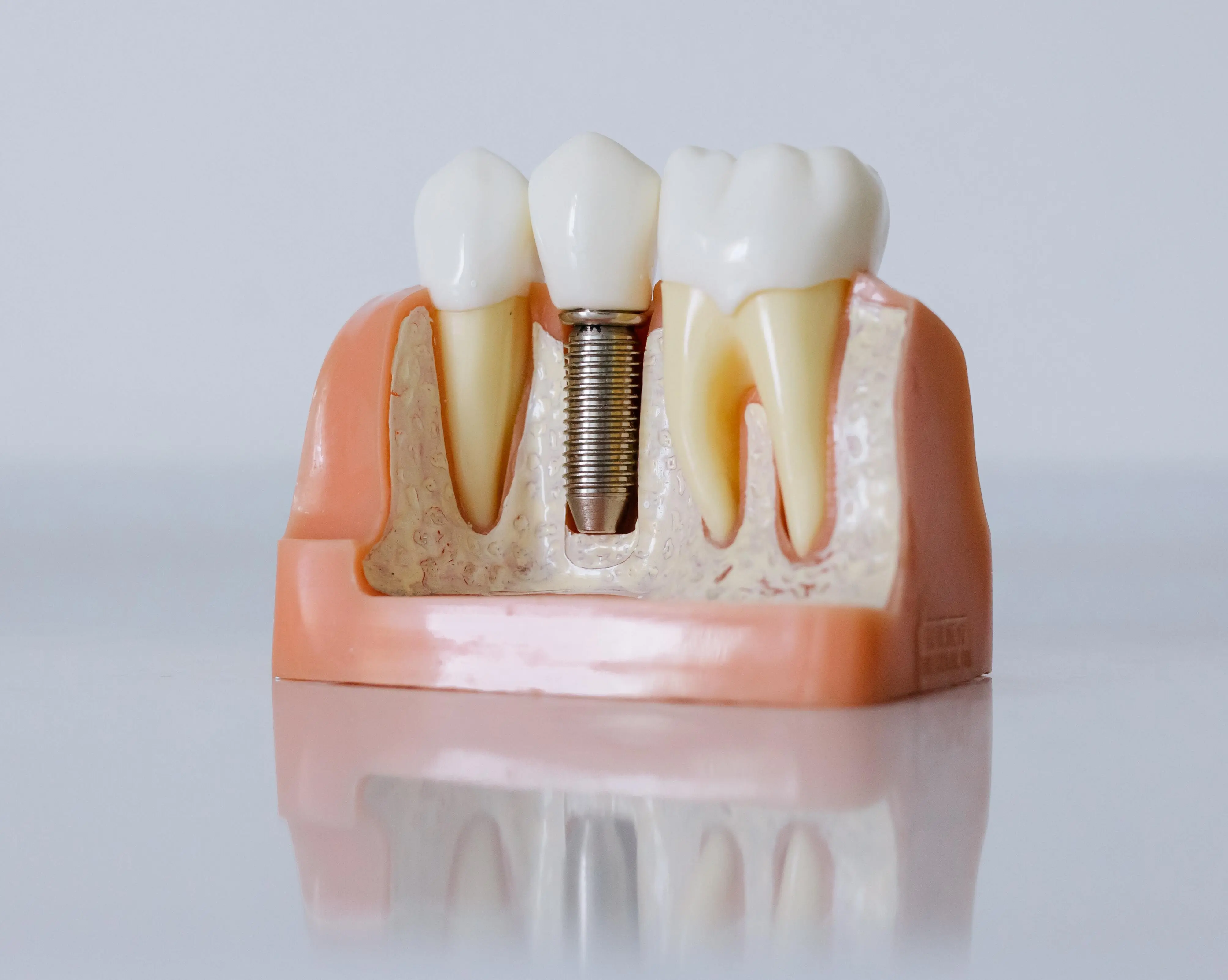
- An implant post replaces the tooth root and fuses with the jawbone. That gives a stable foundation, unlike bridges or dentures.
- Treatment has three stages: place the post, let it fuse with bone, then place an abutment and a crown.
- Bone cells bond to the titanium surface. This locks the implant in place and allows it to function like a natural tooth.
- Implants preserve jawbone, protect neighboring teeth, feel natural and can last decades.
- Risks include infection, delayed healing and failure. Diabetes, low bone density and smoking raise those risks.
- Long-term success needs regular brushing and flossing, dental checkups and avoiding hard foods and tobacco.
The Science Behind How Dental Implants Work
For most patients missing one or more teeth, a dental implant is the option dentists recommend first because it replaces the tooth root, not just the visible crown. That root replacement is also the answer to how dental implants work: a titanium post is anchored directly into the jawbone, where it fuses with living bone to create a foundation as stable as a natural tooth. Unlike a bridge, which relies on adjacent teeth for support, or a denture, which sits on the gums, dental implants stand on their own.
At Norwood Dental, Dr. Ross and Dr. Bussler walk patients through dental implant treatment step by step, starting with imaging to confirm whether an implant is the right fit before any surgical work begins. Let’s take a closer look.
How Does the Dental Implant Process Work? Step by Step
The dental implant process generally unfolds in three main stages: placing the titanium post, allowing it to fuse with the jawbone and attaching a custom crown on top. Here’s what that looks like in practice:
- Consultation and imaging: The dentist reviews jawbone density and oral health, often using 3D Cone Beam CT imaging to map the jaw in detail before planning treatment.
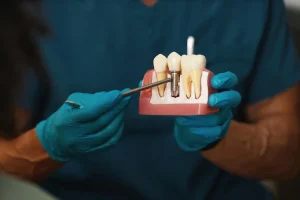
- Implant placement: An implant post is surgically placed into the jawbone, taking the role of a natural tooth root.
- Healing and osseointegration: Over three to six months, the bone grows around the implant post and locks it firmly into place.
- Abutment and crown placement: Once healing is complete, a small connector piece (the abutment) is attached, followed by a custom-matched crown.
At Norwood Dental, we use tools like The Wand® to deliver anesthesia gently and help make your treatment experience as comfortable as possible, especially during the implant placement appointment.
Also read: How long dental implants last
Why Dental Implants Stay Secure
Dental implants stay firmly in place because of a process called osseointegration, where living bone cells grow around and onto the surface of the titanium post. Titanium is biocompatible, meaning the body generally does not reject it, and its surface actually encourages bone cells to attach rather than just tolerate it.
This is different from a bridge, which relies on neighboring teeth for support rather than fusing with the jawbone itself. That direct bond with bone is also why implants can handle normal biting and chewing forces without shifting, something we see reflected in how well patients adapt to eating comfortably again within months of treatment.
Benefits of Dental Implants
Patients considering dental implants often ask what sets them apart from bridges or dentures. A few key advantages:
- Preserve jawbone: The implant post stimulates the bone the way a natural root would, helping prevent the bone loss that follows tooth loss.
- Protect neighboring teeth: Unlike a bridge, an implant does not require grinding down healthy surrounding teeth for support.
- Function like natural teeth: Patients can bite, chew and speak without the slipping or discomfort sometimes associated with removable dentures.
- Built to last: With proper care, implants can last decades, often outlasting other tooth replacement options.
- Support long-term oral health: By filling the gap left by a missing tooth, implants help keep surrounding teeth from shifting out of position.
What Are the Risks and Possible Complications of Dental Implants?
The main risks with dental implants are infection, delayed healing and, in rare cases, implant failure if the post does not fully fuse with the jawbone. A few factors can raise these risks and are worth discussing honestly before treatment begins:
- Infection at the implant site, usually manageable if caught early through regular checkups.
- Uncontrolled diabetes or certain autoimmune conditions, which can slow healing and may require additional evaluation.
- Insufficient jawbone density, sometimes requiring a bone graft before the implant can be placed.
- Smoking, because it can slow down healing and increase the risk of implant failure.
- Poor aftercare, which can lead to gum infection around the implant even though the crown itself cannot decay.
How to Care for Dental Implants?
Caring for a dental implant is simpler than many patients expect, but it does require consistency. Here are some tips we recommend at our clinic in Norwood:
- Brush your teeth two times daily with a soft-bristle toothbrush to remove plaque around the implant and gumline.
- Clean between teeth and around the implant using floss, interdental brushes or a water flosser.
- Visit your dentist periodically for checkups and professional cleanings.
- Avoid chewing hard foods or objects that can cause damage to the implant crown.
- Keep your gums healthy to reduce the risk of implant-related problems.
- Avoid smoking or tobacco use, as it can affect implant healing and long-term success.
- Follow your dentist’s care instructions based on your specific implant needs.
Why Choosing an Experienced Implant Dentist Matters
By now, the mechanics of how dental implants work probably make a lot more sense, but the part that actually matters most is who’s placing them. A titanium post fusing to bone is a fairly forgiving process when it’s planned well, and that planning is where experience shows. Our experts at Norwood Dental, Dr. Ross and Dr. Bussler, have been doing this for a long time, and they lean on 3D imaging so there aren’t surprises halfway through treatment.
If you’ve been putting off dealing with a missing tooth, this is your sign to just ask the question. We are happy to sit down with you at our dental clinic in Norwood, MN, look at your specific case, and tell you honestly whether an implant is the right fit.
Reach the office at:
Call: (952) 467-3518,
Email: appointments@norwood-dental.com or
Visit: 222 E Wilson St, Norwood, MN 55368.
FAQs
No, the crown portion of a dental implant is made of materials like porcelain or zirconia, which cannot decay the way natural tooth enamel does. However, the gum tissue and bone around the implant can still develop an infection called peri-implantitis if plaque builds up, so daily cleaning around the implant remains important.
Dental implants have a high long-term success rate, generally cited around 90 to 95 per cent over ten years, when placed by an experienced dentist and cared for properly. Success depends on factors like bone density, overall health and how consistently a patient follows aftercare instructions.
Yes, but smoking does slow healing and raises the risk of implant failure or infection. Dentists often recommend quitting or cutting back before and after the procedure to give the implant the best chance of fusing properly with the jawbone.
Yes, multiple implants can support a bridge or an implant-supported denture, allowing patients to replace several missing teeth without depending on natural teeth for support. This approach is often more stable than a traditional removable partial denture.
When jawbone density is too low to support an implant, a bone graft can rebuild the area over several months before implant placement. In some cases, a dentist may also recommend an alternative implant technique that requires less bone volume, depending on the location of the missing tooth.